Wine Glossary
A short, no-nonsense reference for the words that come up most in tasting, buying, and talking about wine. Each entry is checked against how the term is actually used, not how it sounds on a label.
Tasting & Structure
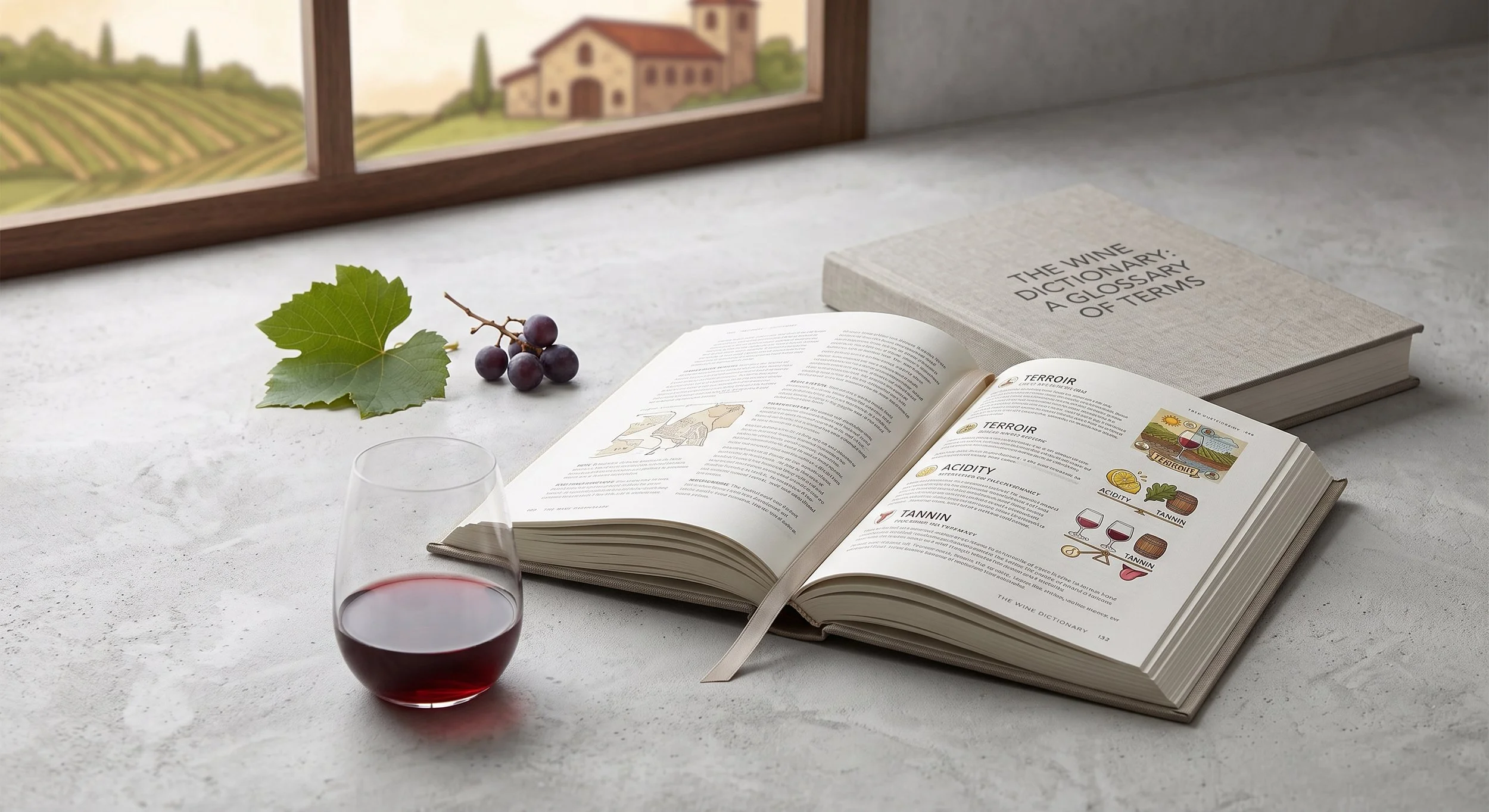
Acidity
The tart, mouth-watering sensation in wine, mainly from tartaric and malic acid in the grape. High acidity makes a wine feel crisp and fresh; low acidity makes it feel soft or flat. It's also what makes a wine age well and pair with rich or fatty food.
Tannin
A compound from grape skins, seeds, and oak that creates a drying, slightly bitter sensation on the gums, most noticeable in young red wines. Tannin softens with age and pairs well with protein and fat, which is why steak and Cabernet is a classic combination.
Body
How heavy or light a wine feels in the mouth, similar to the difference between skim milk and cream. Body comes mainly from alcohol level and sugar, not from color or intensity of flavor.
Finish
How long the flavor lingers after you swallow. A long finish isn't automatically a sign of quality, but it usually indicates more concentration and complexity in the wine.
Balance
Whether a wine's acidity, tannin, sweetness, and alcohol feel proportionate to each other, with no single element dominating. A wine can be intense and still balanced, or light and out of balance.
Minerality
A tasting note used to describe flinty, salty, or wet-stone characteristics in a wine, especially in cooler-climate whites. Despite the name, current research doesn't support the idea that these flavors come directly from minerals in the soil; they're more likely produced during fermentation. The term is useful as a tasting descriptor, just not as a literal explanation.
Nose / Bouquet
The aromas of a wine, usually assessed before tasting. "Nose" often refers to the primary, grape-driven aromas, while "bouquet" refers to the more complex aromas that develop with age.
Legs (or Tears)
The streaks that form on the inside of a glass after swirling. They're related to alcohol and sugar content, not quality, despite the popular myth that more legs means a better wine.
Production
Fermentation
The process where yeast converts grape sugar into alcohol and carbon dioxide. Almost every characteristic of a finished wine, dry or sweet, still or sparkling, traces back to decisions made during fermentation.
Malolactic Fermentation
A secondary process, usually in reds and some whites like Chardonnay, where sharp malic acid converts to softer lactic acid. It's responsible for the buttery, creamy character in many Chardonnays.
Lees
The spent yeast cells left over after fermentation. Ageing a wine on its lees (sur lie) adds texture, body, and sometimes a bready or nutty character, common in Champagne and Muscadet.
Oak Ageing
Ageing wine in oak barrels, which adds flavor compounds (vanilla, spice, toast) and allows slow oxygen exposure that softens tannin. Not all wine is oaked, and oak character is a style choice, not a quality marker.
Skin Contact
Time the grape juice spends in contact with grape skins before or during fermentation. This is where red wine gets its color and tannin; white wines made with extended skin contact are called orange or amber wines.
Sulfites
A preservative naturally produced during fermentation and often added in small amounts to protect wine from oxidation and spoilage. Nearly all wine contains some sulfites; "sulfite-free" wine is extremely rare.
Natural Wine
Wine made with minimal intervention: native yeast fermentation, little to no added sulfites, and no fining or filtration. There's no legal definition of the term, so quality and style vary widely from bottle to bottle.
Labels & Buying
Vintage
The year the grapes were harvested. Vintage matters more in regions with unpredictable weather, where quality can shift noticeably from year to year; it matters less in consistently warm, stable climates.
Appellation / AOC
A legally defined wine region with rules about which grapes can be grown and how the wine can be made. In France this is AOC (Appellation d'Origine Contrôlée); other countries have their own versions, like Italy's DOC or Germany's Prädikat system.
Estate Bottled
Means the wine was grown, made, and bottled by the same producer, rather than grapes or bulk wine being bought in from elsewhere. It's a signal of direct control over the process, not a guarantee of quality.
Reserve
In most countries this term is unregulated and largely marketing language. A few regions, like Spain (Reserva) and Italy (Riserva), define it legally with minimum ageing requirements; elsewhere, treat it as a style cue, not a promise.
Dry vs. Off-Dry vs. Sweet
Describes residual sugar left after fermentation. Dry wines have little to none, off-dry wines have a light touch of perceptible sweetness, and sweet wines are unmistakably so. Acidity affects how sweet a wine tastes, so a wine can have real sugar and still taste fairly dry.
Decanting
Pouring wine into a separate container before serving, either to separate it from sediment in older wines or to expose it to air and soften young, tannic wines. Not every wine benefits from decanting; delicate or already-mature wines can lose character if left open too long.
Have a term you'd like explained? Get in touch.