Sale Price:
€9.99
Original Price:
€14.99
WHY THIS DICTIONARY IS WORTH IT
This Wine Dictionary removes confusion and replaces it with clarity. Instead of guessing, memorising isolated definitions, or doubting your palate, you get a clean, practical system that works with any wine, anywhere.
You stop feeling lost when reading tasting notes, wine labels, or descriptions. Wine language becomes understandable, usable, and natural.
WHAT YOU GET
You receive a structured, easy to use wine dictionary that connects language directly to sensory experience.
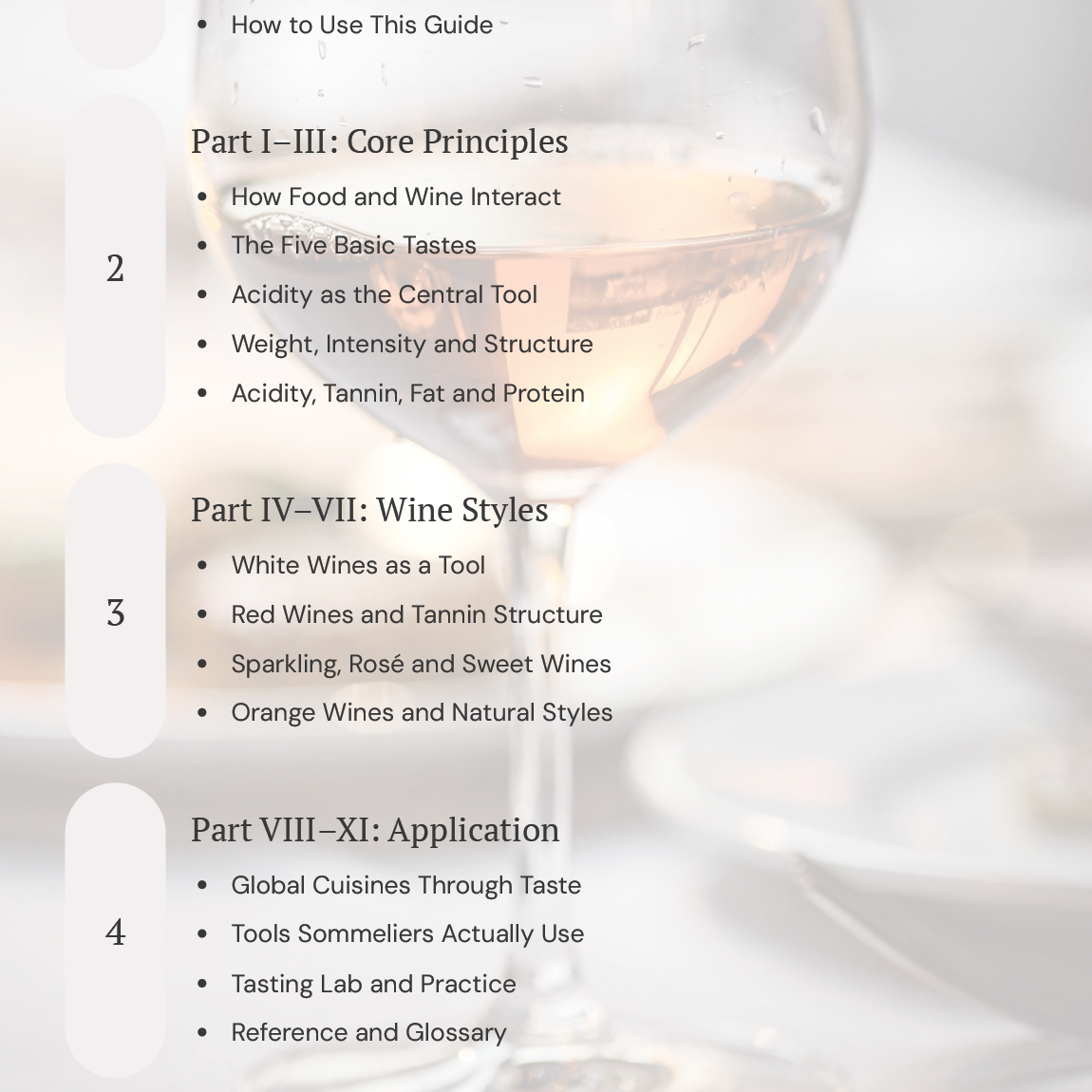
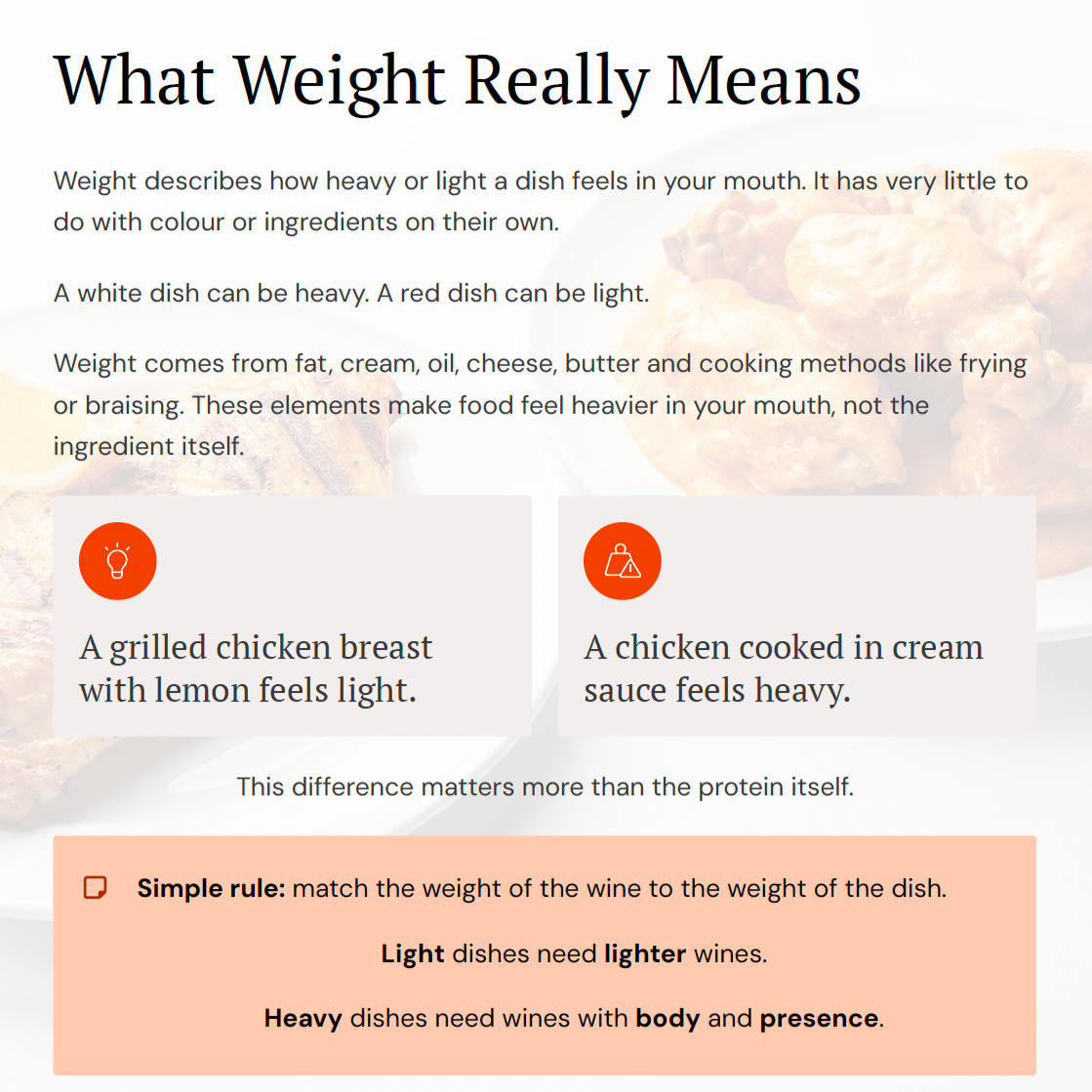
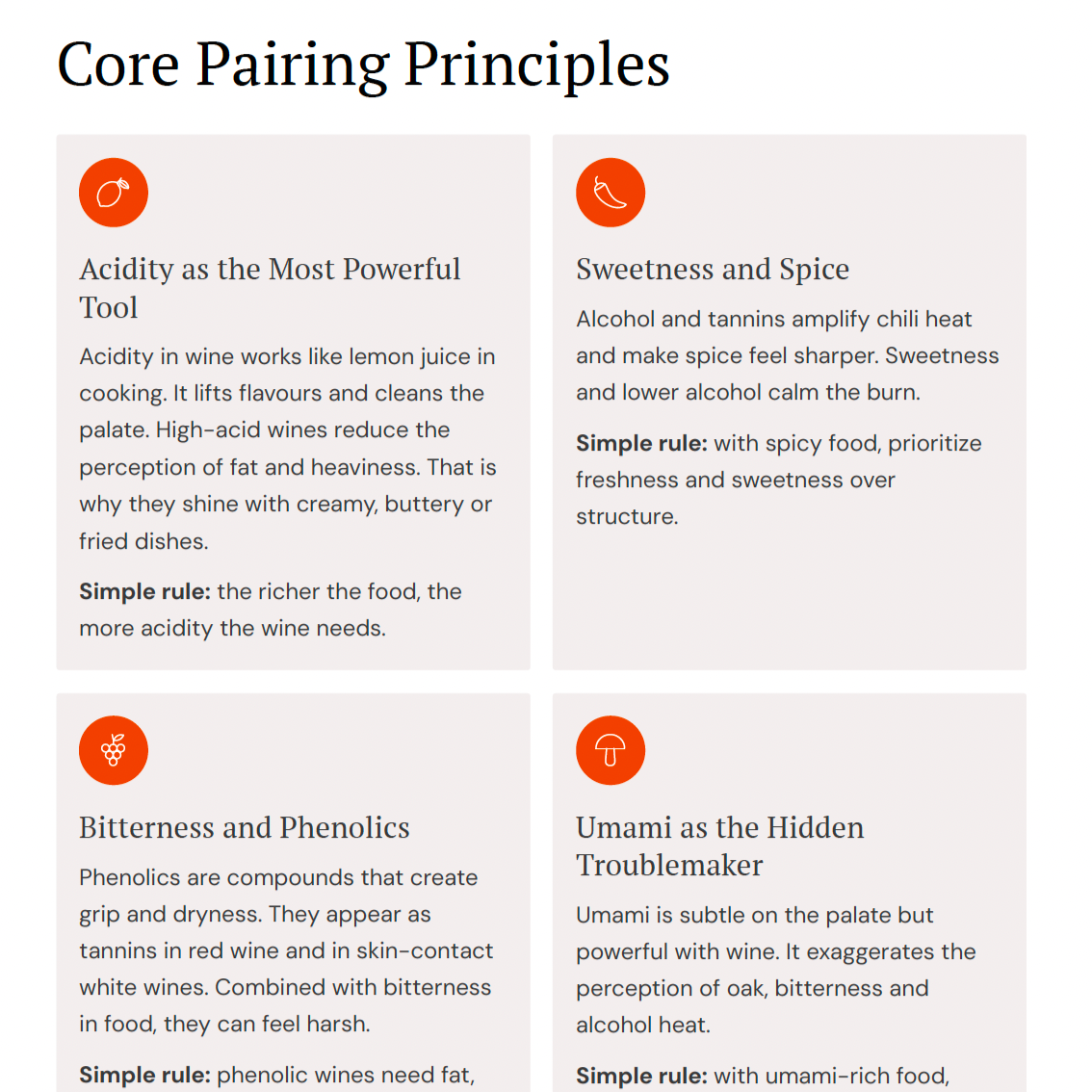
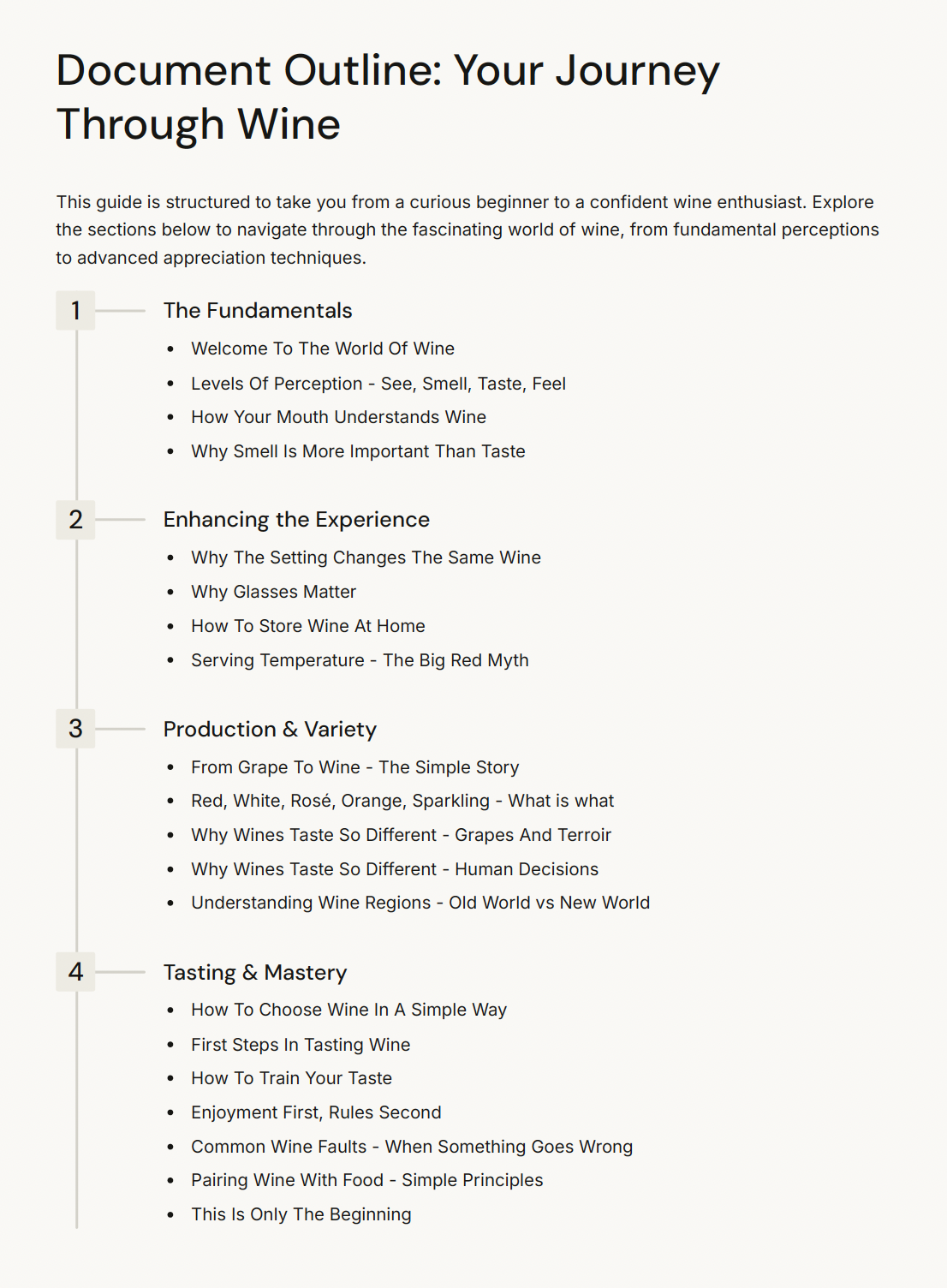
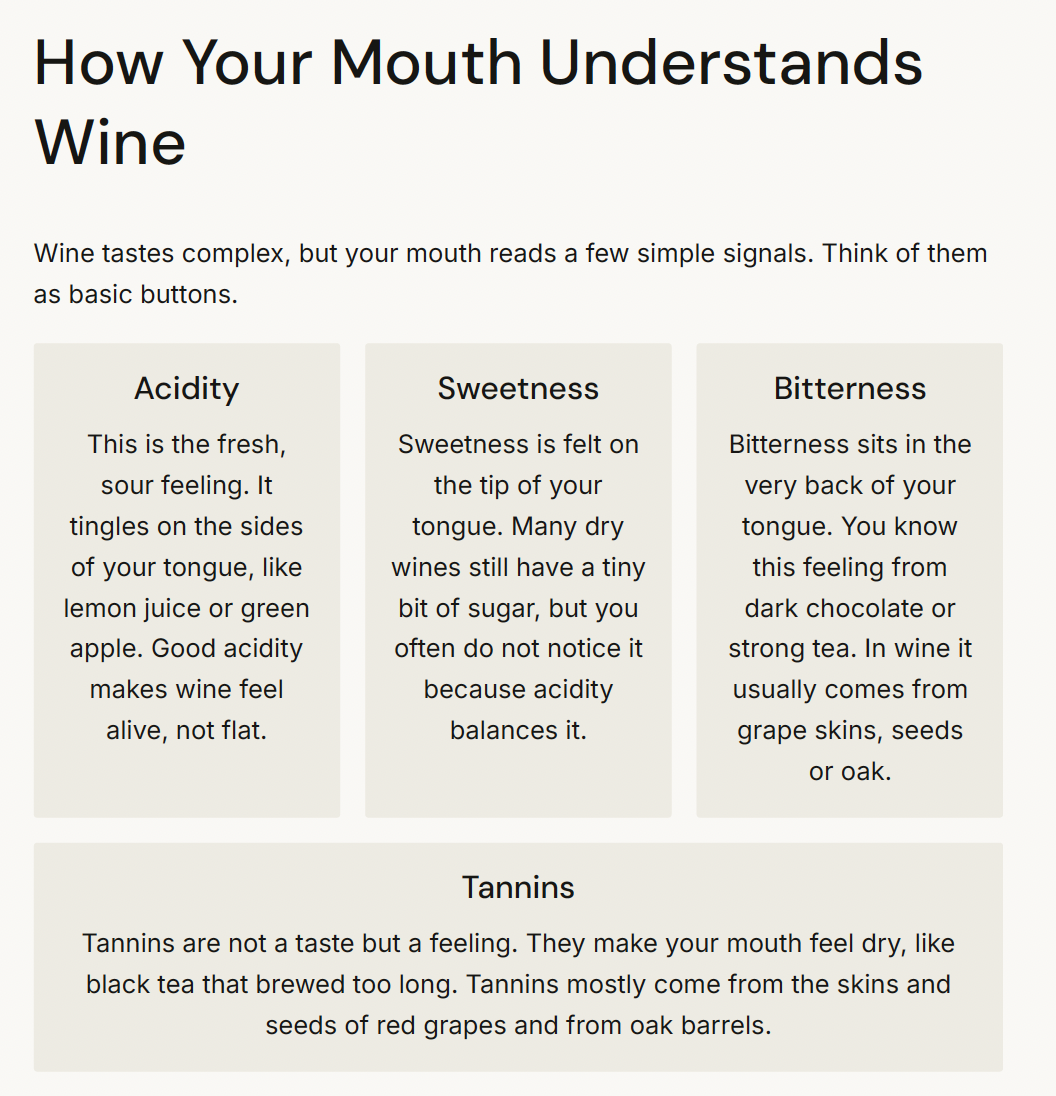
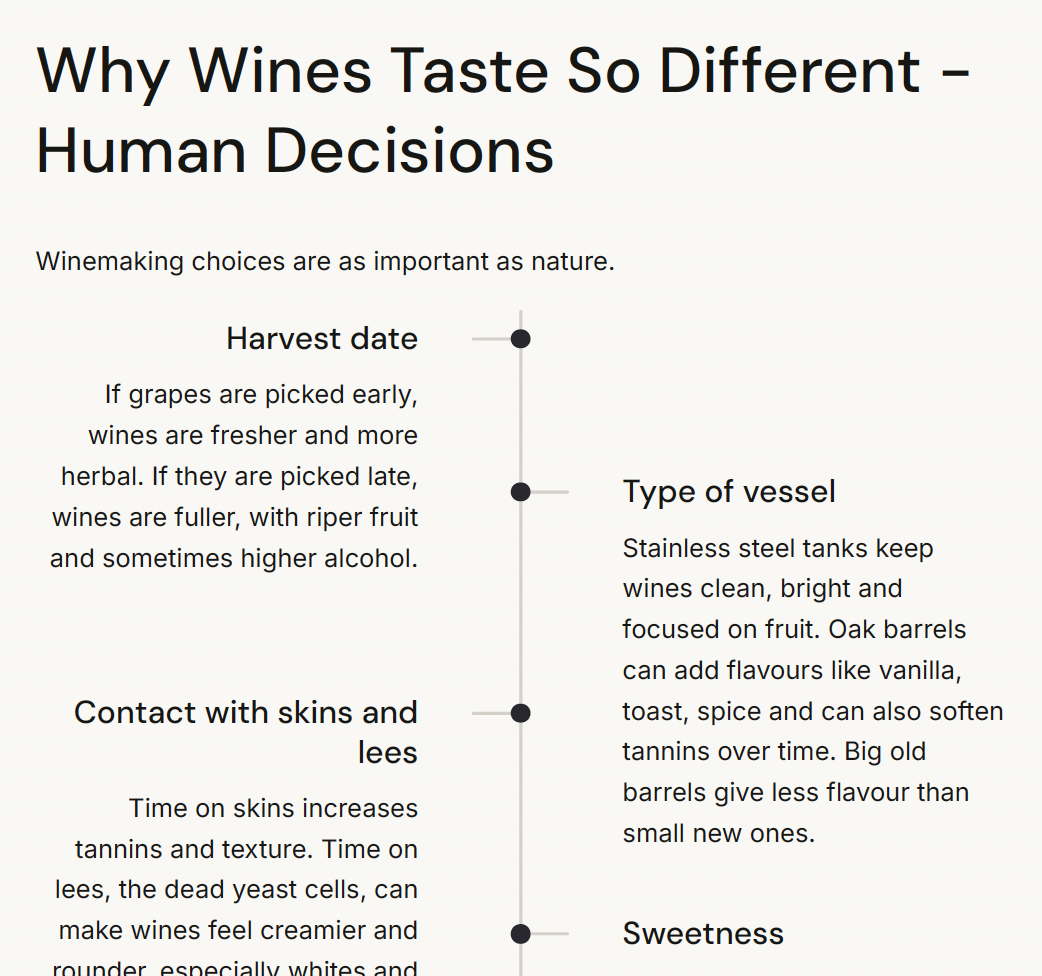
Inside, you’ll find clear explanations of acidity, tannins, body, balance, terroir, ageing, lees, extraction, autolysis, and sparkling wine techniques, along with every core concept that shapes a wine’s style.
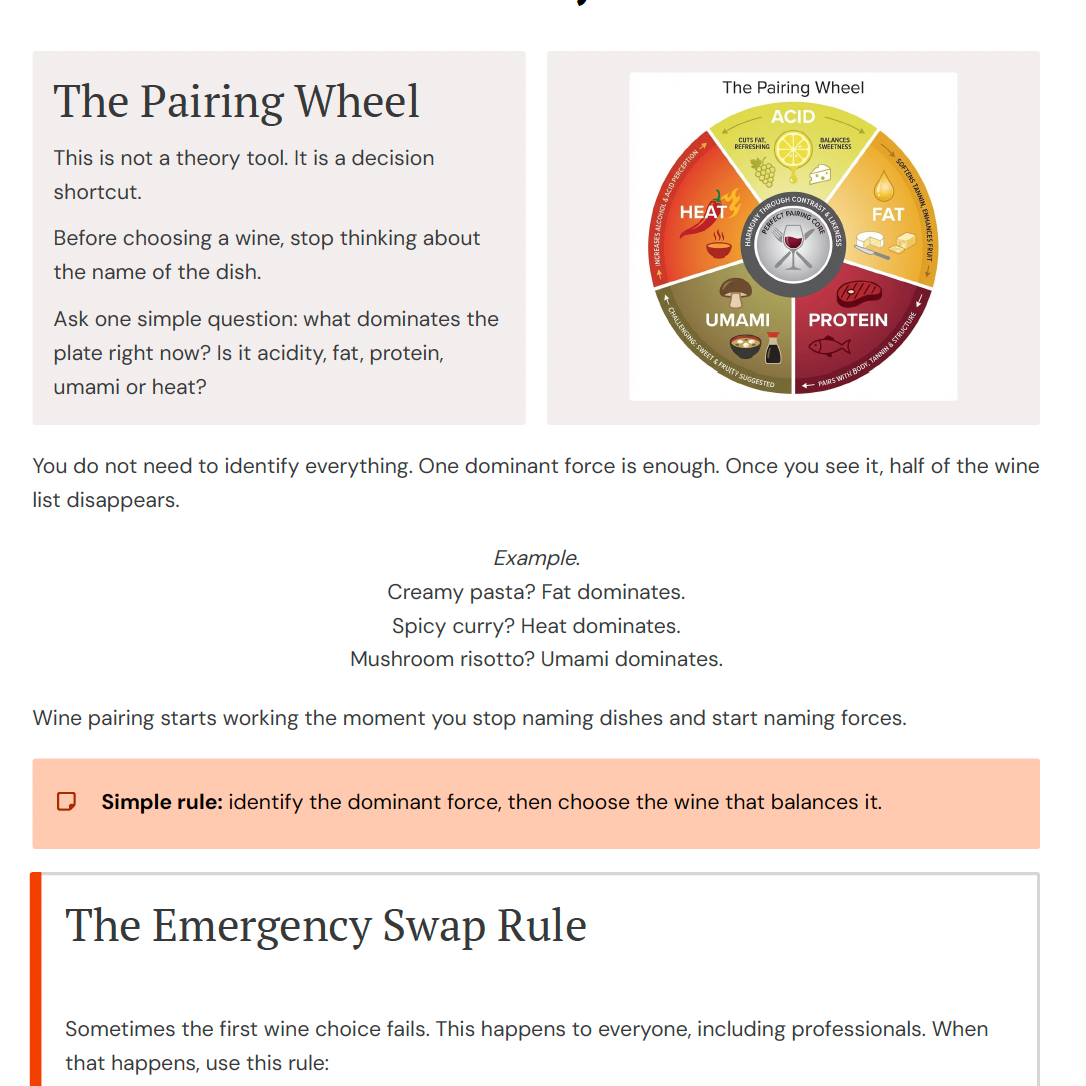
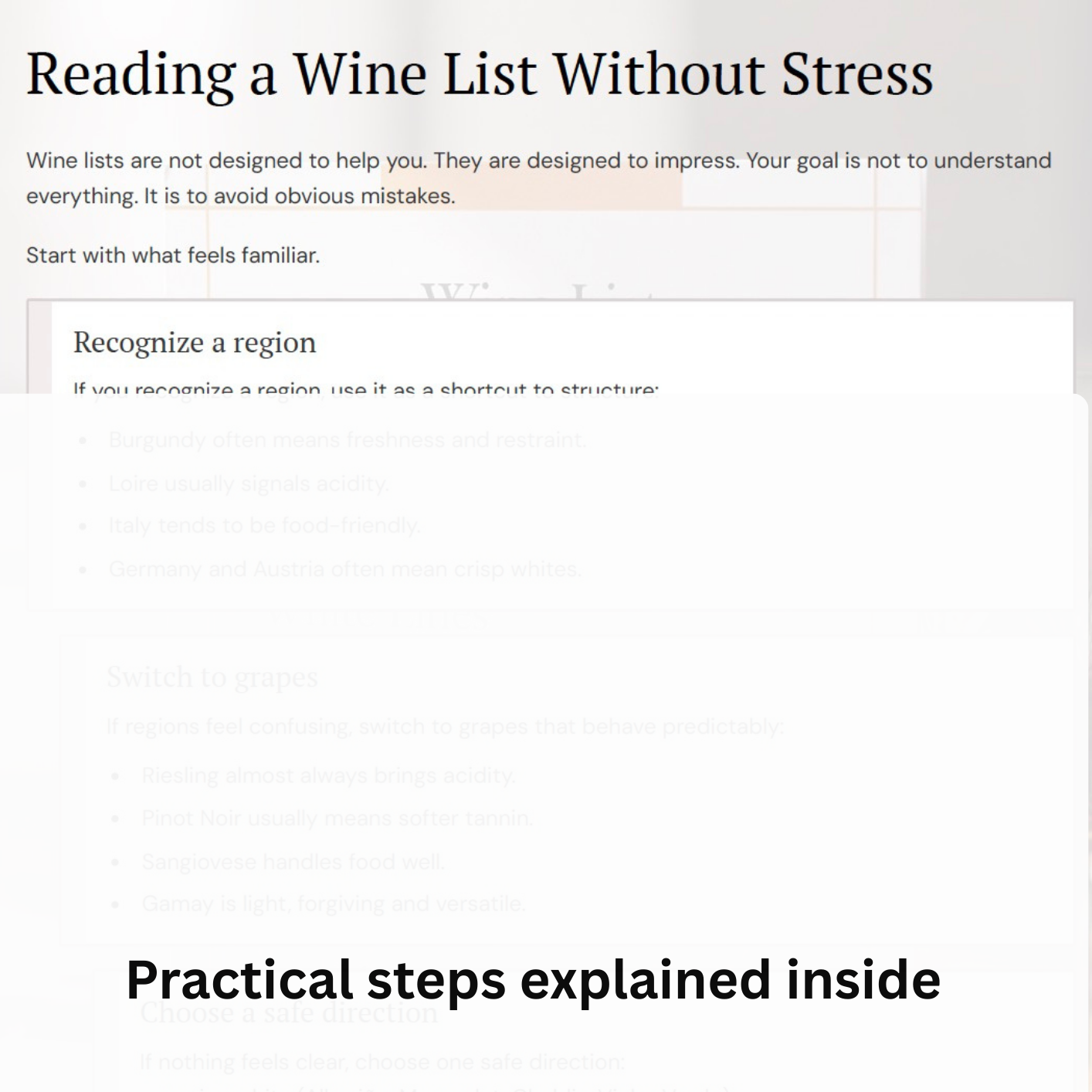
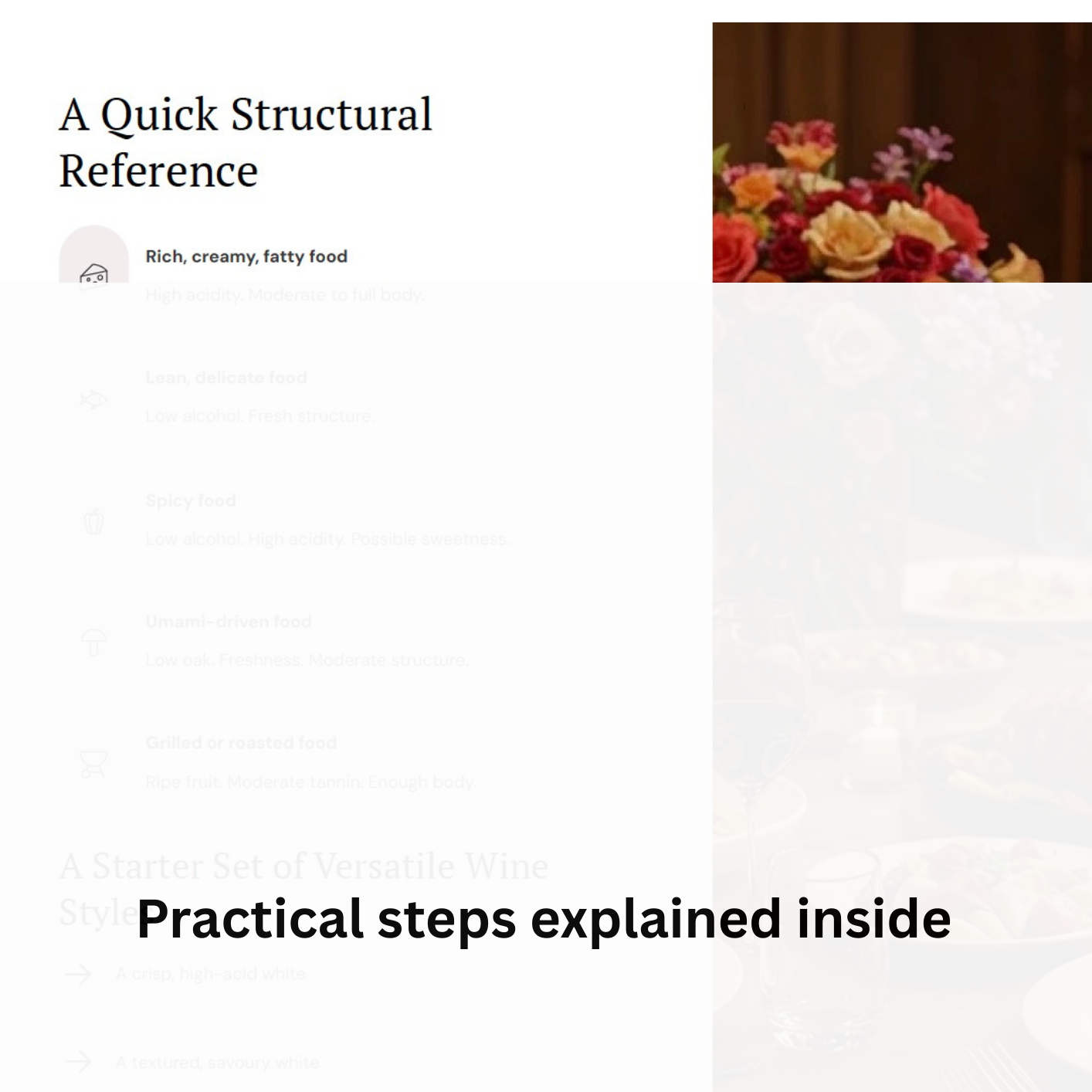
Terms are grouped by structure and sensation, supported by practical examples and style based maps that show how and why wines differ. You also learn a clear method for reading wine labels so you can understand a bottle before you even open it.
HOW IT HELPS YOU
You start recognising structure, balance, development, and production choices with ease. Instead of memorising theory, you understand how it shows up in real wines.
Learning becomes faster, calmer, and far more enjoyable.
WHO IT’S FOR
This dictionary works at every stage. It gives beginners a solid foundation, helps wine lovers stop guessing and gain clarity, and supports students preparing for WSET Levels 1–3 or CMS Introductory and Certified Sommelier.
THE RESULT
A practical reference you will actually use. One that saves time, removes uncertainty, and turns wine language into something intuitive and confident.
If you want to feel clear, fluent, and comfortable when you talk about wine, this dictionary gives you exactly that.
WHY THIS DICTIONARY IS WORTH IT
This Wine Dictionary removes confusion and replaces it with clarity. Instead of guessing, memorising isolated definitions, or doubting your palate, you get a clean, practical system that works with any wine, anywhere.
You stop feeling lost when reading tasting notes, wine labels, or descriptions. Wine language becomes understandable, usable, and natural.
WHAT YOU GET
You receive a structured, easy to use wine dictionary that connects language directly to sensory experience.
Inside, you’ll find clear explanations of acidity, tannins, body, balance, terroir, ageing, lees, extraction, autolysis, and sparkling wine techniques, along with every core concept that shapes a wine’s style.
Terms are grouped by structure and sensation, supported by practical examples and style based maps that show how and why wines differ. You also learn a clear method for reading wine labels so you can understand a bottle before you even open it.
HOW IT HELPS YOU
You start recognising structure, balance, development, and production choices with ease. Instead of memorising theory, you understand how it shows up in real wines.
Learning becomes faster, calmer, and far more enjoyable.
WHO IT’S FOR
This dictionary works at every stage. It gives beginners a solid foundation, helps wine lovers stop guessing and gain clarity, and supports students preparing for WSET Levels 1–3 or CMS Introductory and Certified Sommelier.
THE RESULT
A practical reference you will actually use. One that saves time, removes uncertainty, and turns wine language into something intuitive and confident.
If you want to feel clear, fluent, and comfortable when you talk about wine, this dictionary gives you exactly that.
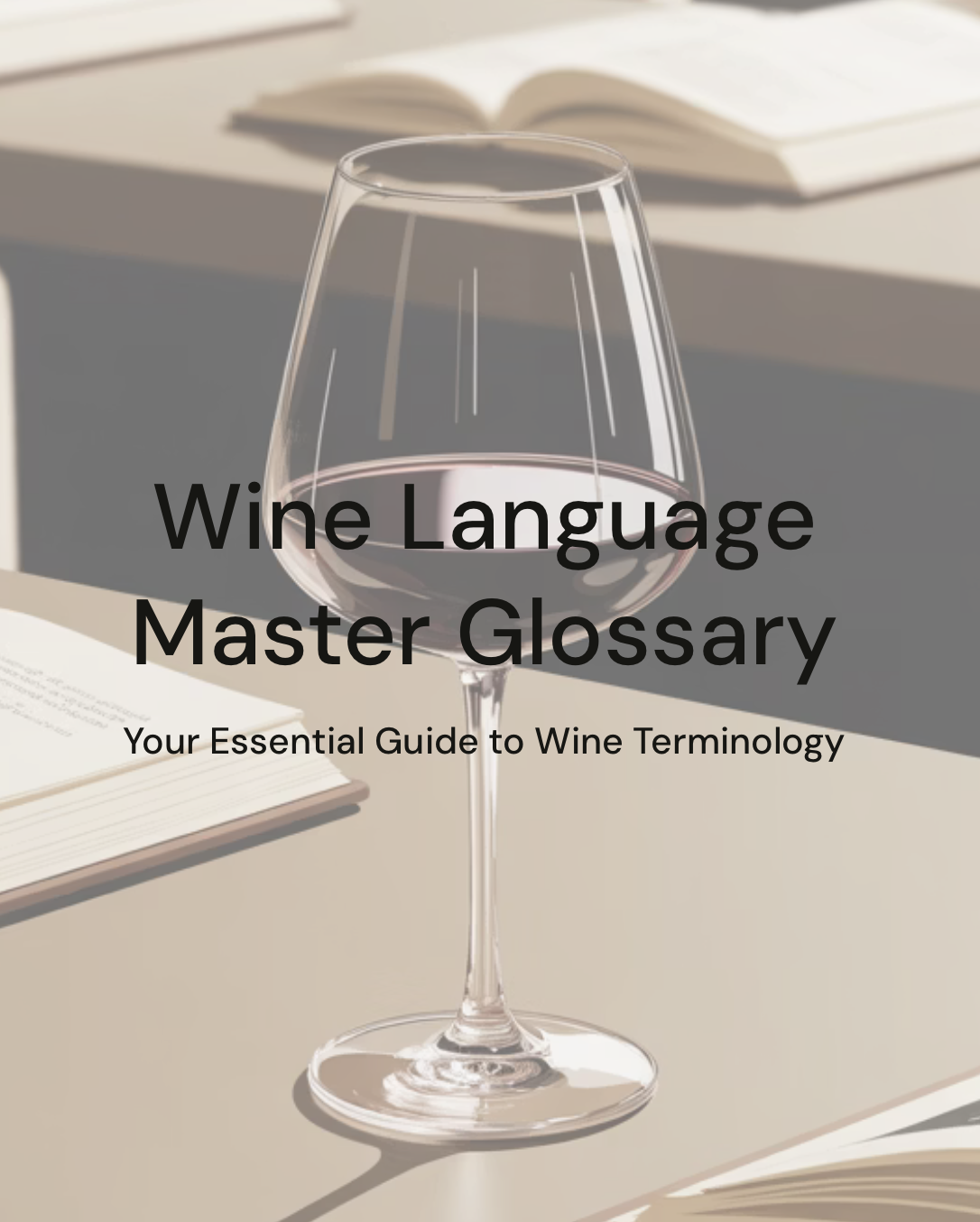 Image 1 of 7
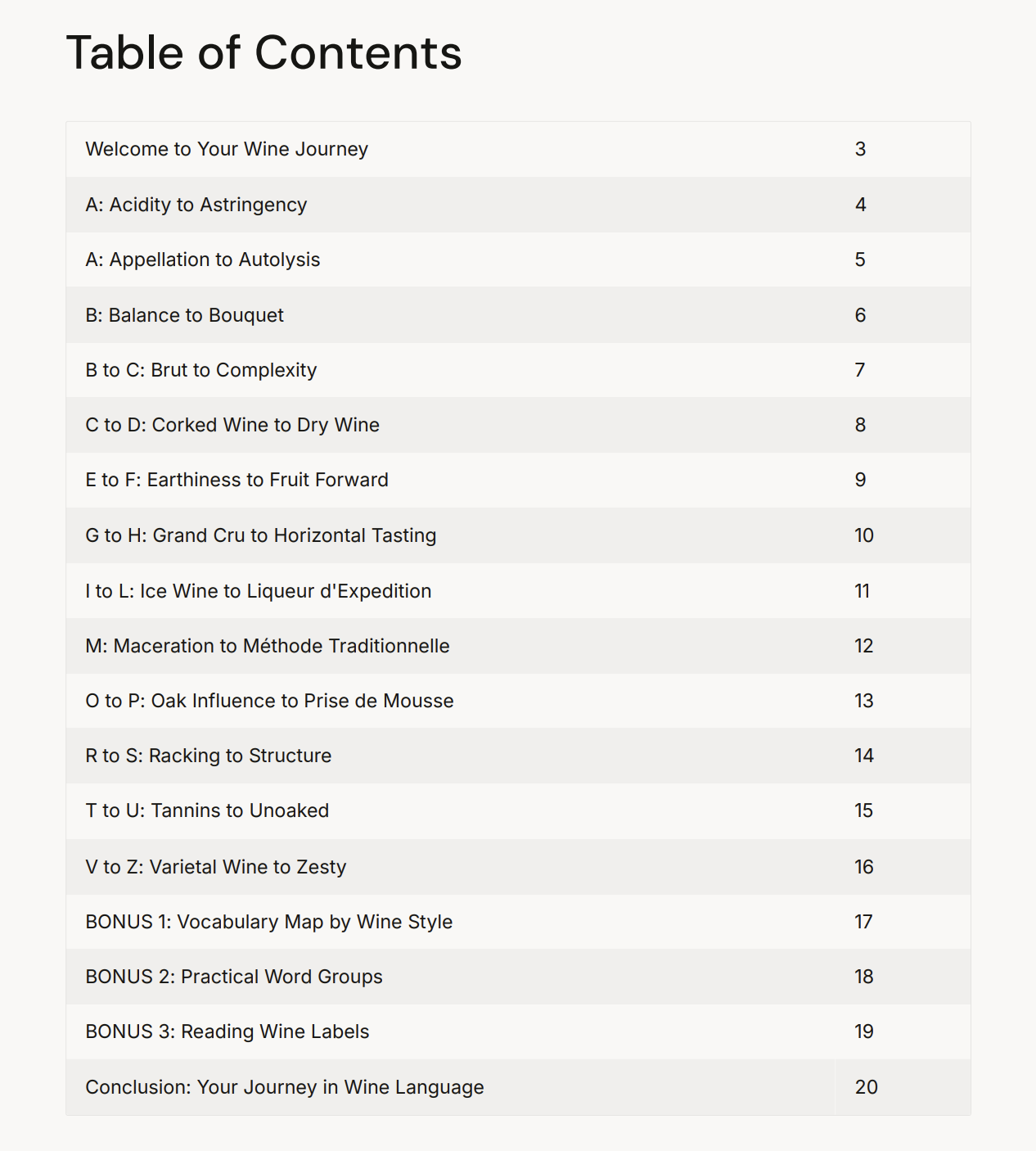 Image 2 of 7
 Image 3 of 7
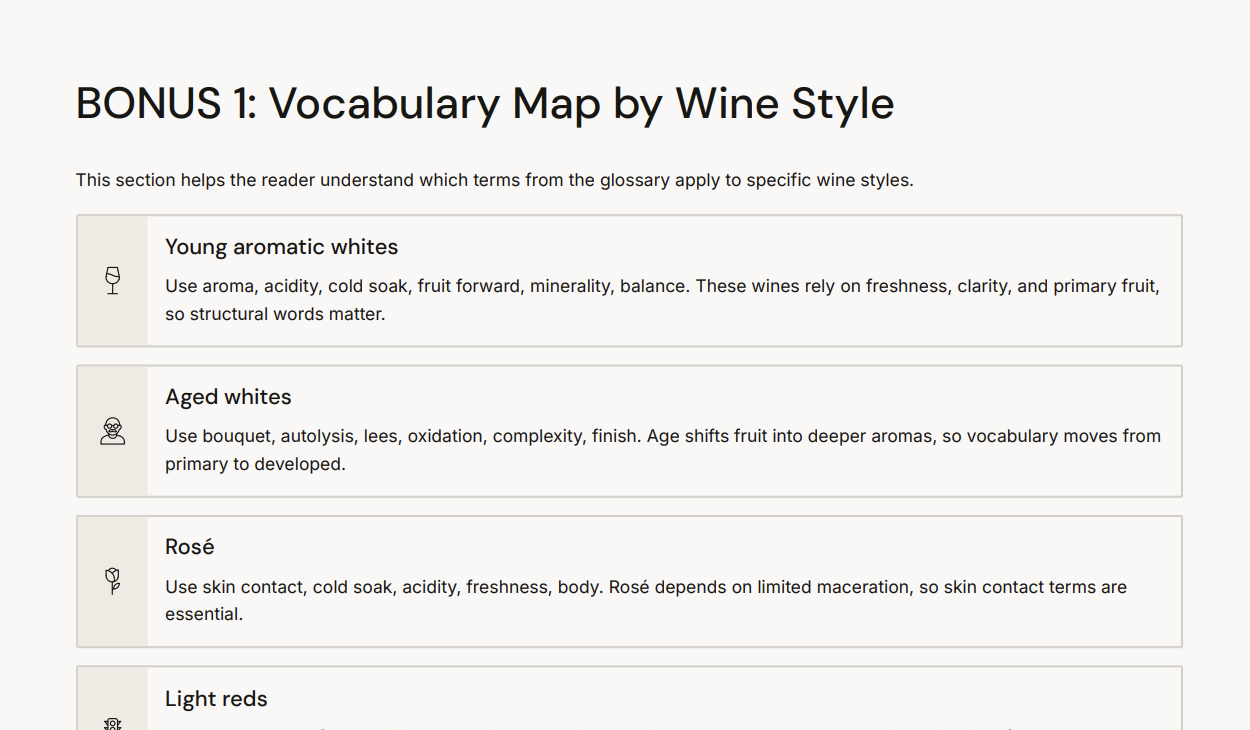 Image 4 of 7
 Image 5 of 7
 Image 6 of 7